It’s 2026, and the hum of the internal combustion engine is becoming a nostalgic sound. If you’ve spent any time on the road lately, you know the electric revolution isn’t “coming”—it’s already parked in your neighbour’s driveway. From sleek city hatchbacks to the rugged electric utes now dominating Australian roads, the shift to EVs is undeniable.
However, there is one place where the future still feels a bit… stalled: the local shopping centre car park.
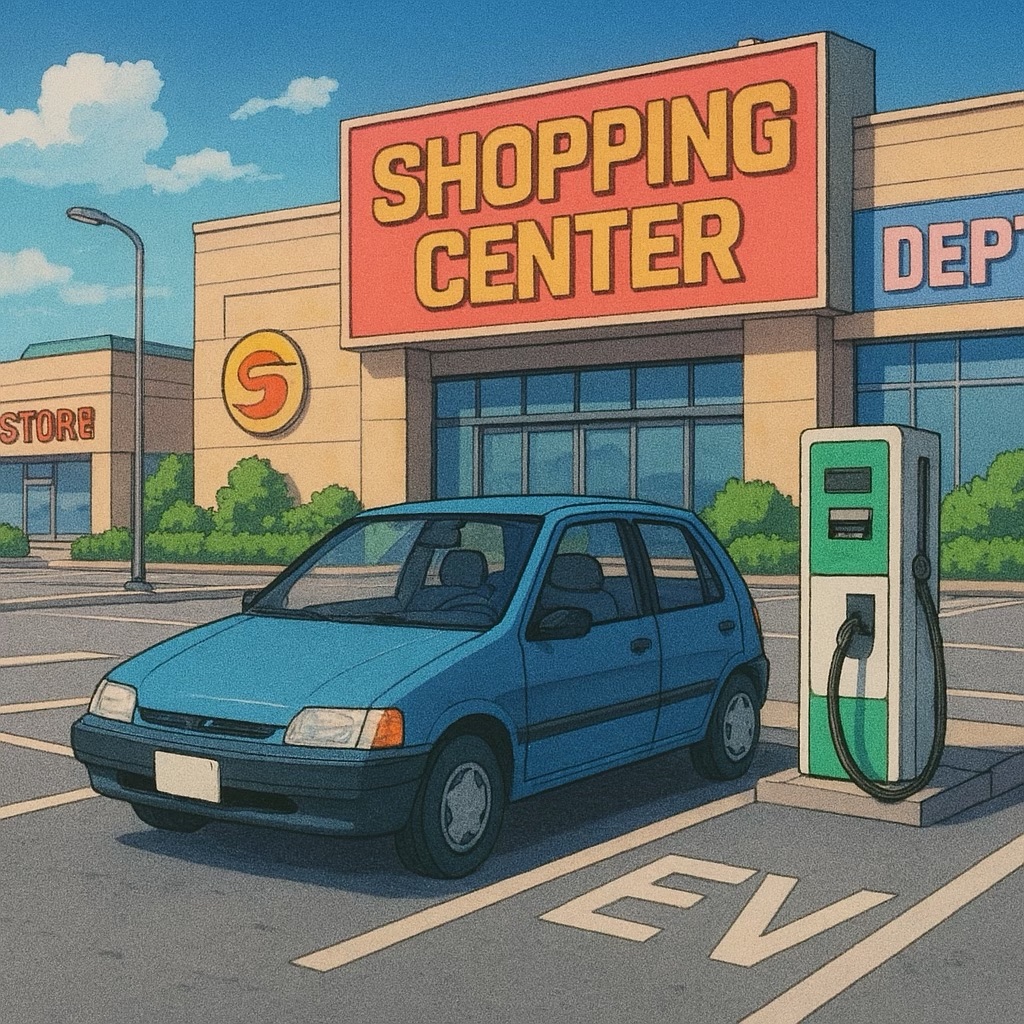
While we’ve seen a massive surge in EV ownership, our infrastructure at major retail hubs is struggling to keep pace. We’ve all been there—circling a massive concrete labyrinth, battery sitting at 15%, only to find that the “dedicated” EV bays are either non-existent or blocked by a vintage petrol sedan. It’s time we shifted gears and demanded a percentage of parking for electric vehicles.
The “Dwell Time” Advantage
Retailers often talk about “dwell time”—the amount of time a customer spends in a store. The longer you stay, the more likely you are to grab that extra coffee or browse a second aisle. EV charging and shopping are a match made in retail heaven.
- Average Charging Session: Most public sessions at retail hubs last around 35 minutes.
- Customer Behaviour: Drivers are actively choosing destinations based on charging availability. If a centre offers reliable bays, it doesn’t just get a car; it gets a loyal shopper.
- Economic Impact: Research shows that EV drivers often spend more while their cars top up, making those charging bays some of the most profitable real estate in the car park.
The 20% Benchmark
In many regions, new commercial developments are now required to ensure that 20% of parking spaces are equipped with EV charging infrastructure. This is a fantastic step forward for the buildings of tomorrow, but what about the giants of today?
Our existing larger shopping centres need to adopt this 20% benchmark as a retrofitting goal. A handful of chargers at the far end of a basement level isn’t enough anymore. We need visible, accessible, and plentiful bays that reflect the actual percentage of EVs on the road today.
Overcoming “ICE-ing” and Infrastructure Gaps
It isn’t just about the chargers; it’s about the bays themselves.
- Clear Signage: Proper marking and enforcement are required to prevent “ICE-ing” (Internal Combustion Engine vehicles parking in EV spots).
- Diverse Charging Speeds: While DC fast chargers are great for a quick zap, a mix of AC “destination” chargers is perfect for those doing a weekly grocery run or catching a film.
- Future-Proofing: Centres that install the “skeleton” for charging now (conduit and power capacity) will save millions in the long run as demand continues to skyrocket.
The Bottom Line
Providing EV parking isn’t just a “green” perk anymore—it’s a logistical necessity for a modern community. If a shopping centre wants to remain a relevant destination, it needs to cater to the cars its customers are actually driving.
It’s time to move beyond the experimental phase and make dedicated EV bays a standard feature of every major car park. After all, the only thing better than a productive shopping trip is coming back to a car that’s ready for the road ahead.
 EV Journey
Leave a comment