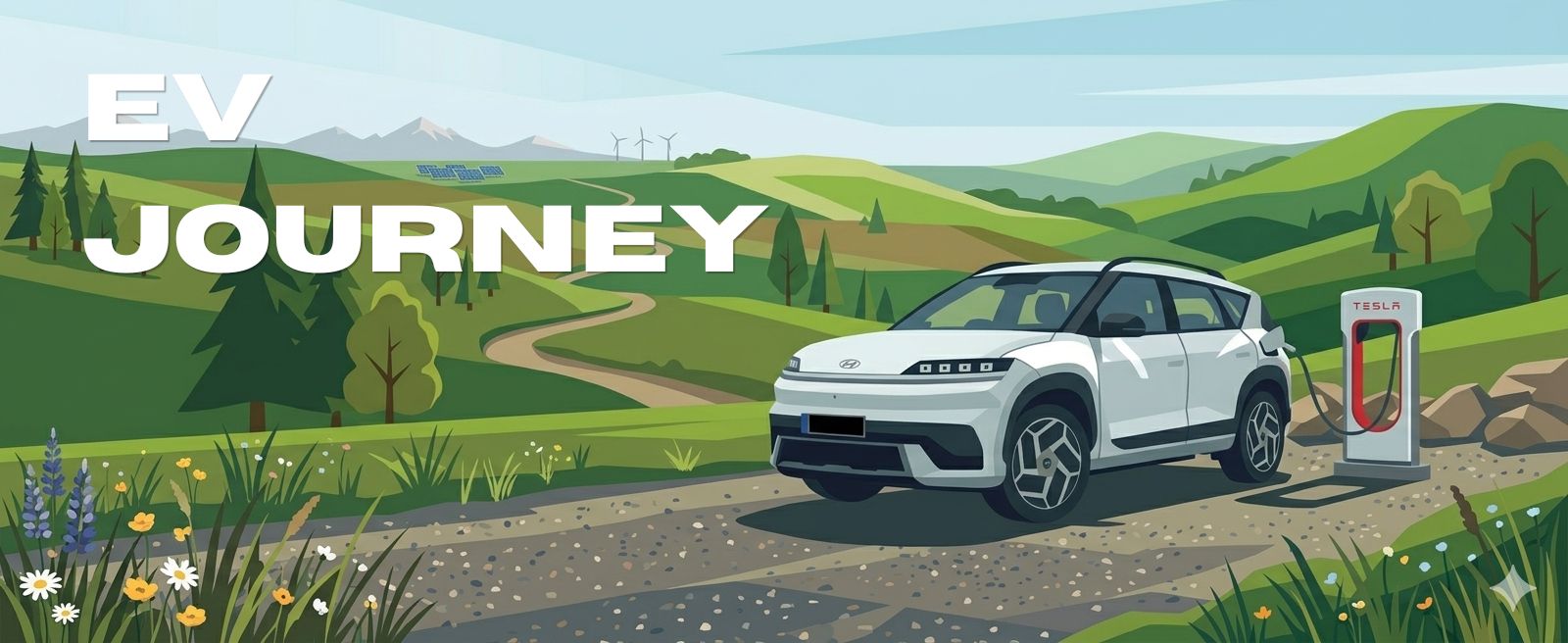
Here’s a question that might sting a little if you haven’t made the switch yet: should non-EV drivers help foot the bill for Australia’s expanding public charging network?
It’s a debate that’s heating up as fast as the EV market itself. With the federal and state governments weighing how to fund the next phase of charging infrastructure, one proposal on the table is a levy that would draw from general revenue — meaning every Australian taxpayer, regardless of what’s in their driveway, would contribute. It’s sparked pushback from some quarters and quiet support from others. But step back and look at where this country is heading, and the logic becomes harder to argue with.
Australia Is Making the Switch — Faster Than Anyone Expected
The numbers tell a compelling story. In April 2026, electric vehicles accounted for a record 16.4 per cent of all new car sales in Australia — roughly one in every six vehicles leaving a dealership. That’s up from just 6.6 per cent in April 2025, a remarkable leap in just twelve months. Year-to-date EV sales have already more than doubled compared to the same period last year, with 15,459 full battery EVs sold in April alone.
A combination of forces is driving this surge: higher petrol prices (sharpened by ongoing instability in the Middle East), a growing range of over 110 available EV models, improved supply thanks to the New Vehicle Efficiency Scheme, and the continued Federal Government Electric Car Discount, which has helped more than 100,000 Australians overcome the upfront cost barrier of switching.
Industry leaders expect this trajectory to continue. Kia Australia’s CEO has forecast EV sales settling into a 20–30 per cent share of the new car market going forward. That’s not a niche future — that’s the mainstream.
The Case for Shared Investment
So back to the question: why should someone who drives a petrol car today care about EV charging infrastructure?
Because today’s petrol driver could very well be tomorrow’s EV owner.
As the Australian Electric Vehicle Association (AEVA) has put it, a reliable, complete national charging network benefits all Australians — not just those who’ve already made the switch. The AEVA’s position is clear: public charging infrastructure should be funded from general revenue, in partnership with industry, rather than through an EV-specific charge that would disproportionately burden early adopters, many of whom are lower and middle-income families.
There’s also the matter of fuel security. Australia imports around 90 per cent of its liquid fuel and has lost 70 per cent of its domestic refining capacity over the past 15 years. Building a robust domestic EV charging network is, in effect, an investment in national energy resilience — something that has value for every Australian, regardless of what they drive.
The road toll argument is worth noting too. Heavier, more polluting vehicles have a measurably greater impact on road infrastructure and are disproportionately involved in serious collisions. A funding model that treats all road users equally in contributing to cleaner, safer transport infrastructure isn’t unfair — it’s forward-thinking.
The Infrastructure Gap We Need to Talk About
There is, however, a critical caveat to any optimism about Australia’s EV future: the charging network must actually keep pace with demand — and right now, it isn’t.
Australia currently has around 5,000 public charging sites, but the International Energy Agency’s 2025 Global EV Outlook found that Australia has 45 EVs for every public charging point, compared with a global average of just 11. EV sales are outpacing charge point installations by more than three to one. Scenes of long queues at fast chargers over the Easter long weekend were a pointed reminder of how quickly the gap is growing.
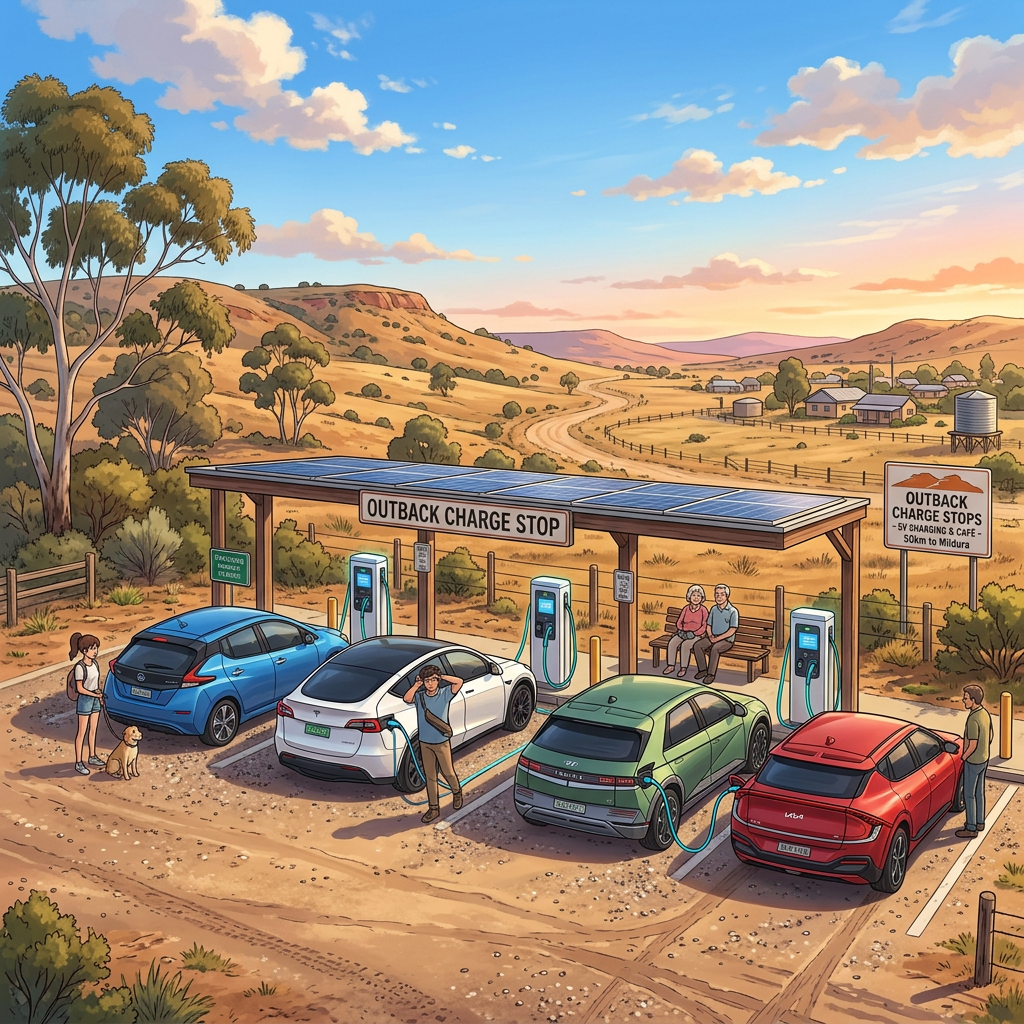
The situation is especially acute in regional and rural Australia, where access to public charging remains genuinely poor. The NSW government’s 2026 Electric Vehicle Strategy, backed by $100 million in new funding, has made regional coverage a central priority — explicitly targeting known blackspots and areas where EV owners currently face real range anxiety not on the highway, but when they arrive at their destination. As NSW Roads Minister Jenny Aitchison noted, EV chargers in regional towns aren’t just about convenience — they drive economic development, putting communities on the map and supporting local businesses.
For EV adoption to be equitable and genuinely national, the charging rollout cannot remain a predominantly urban story. Outer-suburban drivers, regional commuters, and anyone who wants to road-trip beyond the major centres needs confidence that the infrastructure will be there when they need it.
The federal government’s Driving the Nation Fund has committed $39.3 million to deliver 117 EV chargers on key highway routes, with site selection explicitly targeting blackspots and prioritising regional and remote communities. It’s a start — but industry bodies are clear that the scale of investment needs to grow alongside the market.
Reliability: The Problem Nobody Wants to Talk About
More chargers is only half the answer. The other half — and the one that tends to get glossed over in infrastructure announcements — is maintenance.
Anyone who has pulled into a charging station only to find one or more units out of service knows the frustration. It’s a complaint that comes up repeatedly among EV drivers and remains one of the most cited barriers for those considering the switch. An unreliable charger isn’t just an inconvenience — it’s a genuine safety issue for drivers in regional areas who may have planned their route around it.
The AEVA has been direct on this point: “What’s important is ensuring these chargers are properly maintained, and service level agreements are honoured.” It’s not enough to build the infrastructure and walk away. Any serious national EV charging strategy must include enforceable maintenance standards and accountability mechanisms — not just funding for installation.
The Electric Vehicle Council’s Charge@Large platform, which shows real-time status across more than 2,100 charging units, is a useful step. But transparency about which chargers are working is a band-aid if the underlying reliability problem isn’t being addressed at the operator level.
Building the Network Australia Will Need
Australia is at an inflection point. One in six new cars sold is now electric. That share will keep climbing. The question isn’t whether a national charging network is needed — it’s whether we’ll build the right one.
That means:
Coverage that reaches regional and rural Australia, not just capital city corridors. An EV revolution that leaves regional communities behind isn’t a revolution — it’s a two-tier system.
Maintenance and reliability standards baked into funding agreements, not treated as an afterthought. Chargers that don’t work aren’t infrastructure — they’re liabilities.
Shared investment reflecting the shared benefit. A petrol driver today is an EV driver tomorrow. The network that enables that transition has value for everyone.
The momentum is undeniable. April’s record sales figures, the expansion of available models, improving supply chains, and growing policy support all point in the same direction. The infrastructure just needs to keep up.


Leave a Reply