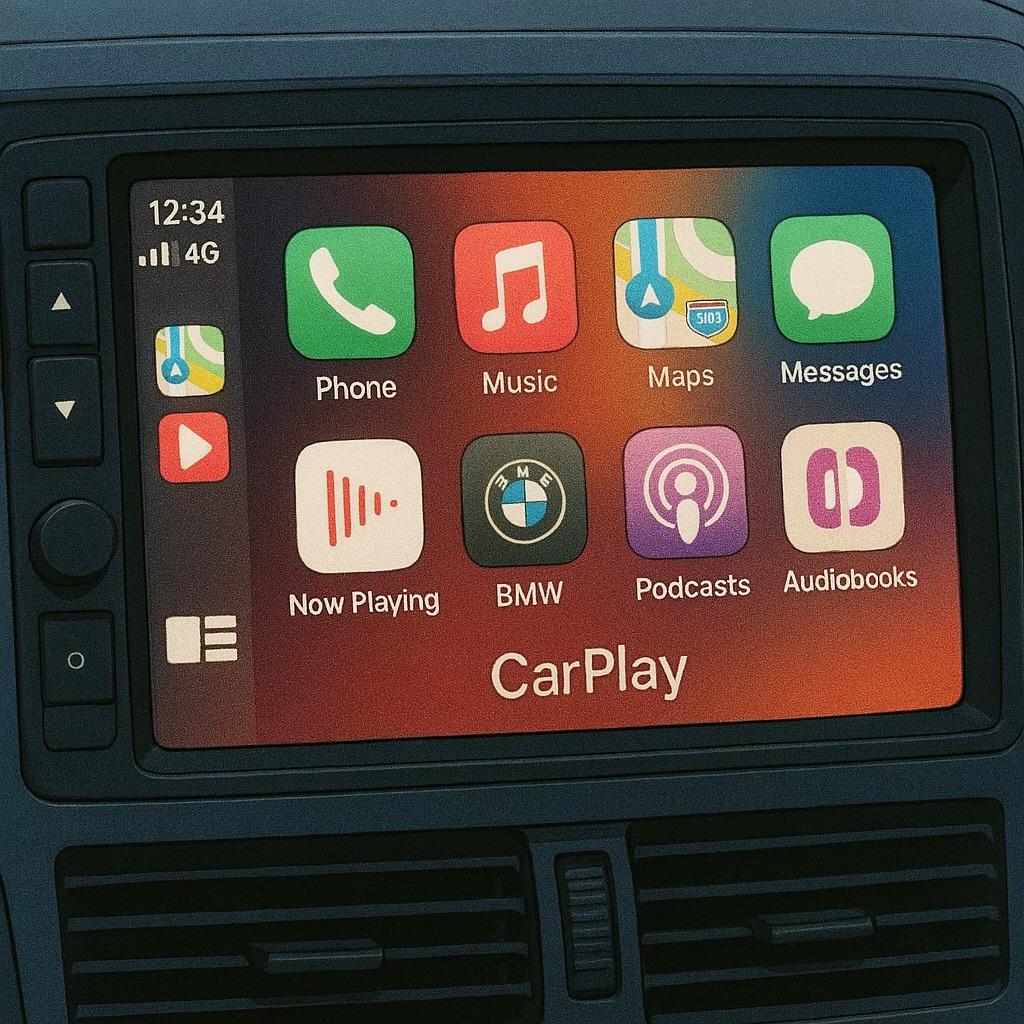
I drove to the shops this morning. Simple enough. Except by the time I’d reversed out of the driveway, CarPlay still hadn’t connected. Again. Apple, we need to talk.
There’s a particular kind of frustration reserved for technology that almostworks. Not broken enough to return. Not reliable enough to trust. Wireless CarPlay sits squarely in that maddening middle ground, and after yet another failed connection on a five-minute run to the supermarket, I’ve decided to get it off my chest.
Let me be clear: when CarPlay works, it’s genuinely brilliant. Clean interface, seamless iPhone integration, proper maps, hands-free everything. In an EV especially, where the whole driving experience leans on a polished digital ecosystem, CarPlay feels like it belongs. It should be one of those frictionless moments that makes you quietly grateful for modern technology.
Instead, it’s a coin toss.
The Problem in Plain English
Wireless CarPlay relies on a Wi-Fi handshake brokered initially over Bluetooth. It sounds elegant in theory. In practice, it introduces a cascade of failure points that can silently derail the whole connection — and Apple’s error handling when something goes wrong is, generously speaking, minimal.
- Slow or stalled handshake — The Bluetooth-to-Wi-Fi handover can simply take too long, especially on short journeys. You’re already moving before it’s finished.
- No automatic retry — When it fails, nothing retries. The system just gives up, leaving you staring at a blank screen with no feedback.
- Wi-Fi band conflicts — Home networks, garage routers, or nearby hotspots can interfere with the 5GHz channel CarPlay prefers to use.
- Vehicle wake-up timing — EVs that wake from sleep just as the phone tries to connect create a timing mismatch that often results in a miss.
The infuriating part? A manual reconnect — plugging in a cable, toggling Bluetooth, or restarting the head unit — almost always fixes it instantly. That tells you the underlying system is perfectly capable. It’s the automatic handshake that keeps stumbling, and that’s exactly the piece Apple needs to fix.
What I Actually Want From Apple
This isn’t a wishlist for pie-in-the-sky features. These are practical, achievable improvements that would make wireless CarPlay genuinely reliable — the kind of reliability that means it fades into the background and you never think about it again.
- Aggressive silent retry — If the connection fails, keep trying quietly in the background for the first 60 seconds of a journey. Don’t announce it. Don’t ask me to do anything. Just keep trying until it lands.
- Smarter channel negotiation — Detect Wi-Fi interference early and fall back to an alternative frequency band without dropping the session entirely. 2.4GHz isn’t ideal, but it’s infinitely better than nothing.
- Pre-emptive connection on unlock — The moment my iPhone unlocks near a paired vehicle, start the handshake process. By the time I start the car, the work should already be done.
- Transparent failure logging — Give users — or at minimum, technicians — access to a simple connection log. Right now, diagnosis is guesswork. A little transparency would go a long way.
- Standardised vehicle certification — Work more closely with car manufacturers to certify Wi-Fi radio timings at a hardware level. Connection consistency shouldn’t vary this wildly between makes and models.
iOS 27
The upcoming release of iOS, version 27, will focus primarily on fixes and stability of the platform rather than adding new features. Hence, my greatest hope, beyond autocorrect and Siri each being useful, is that systems that have obvious issues are actually addressed. With an Apple’s new CEO to commence in September, I wonder might we see the company head in a new direction?
 EV Journey
Leave a comment