There was a time when Australian discourse around electric vehicles felt stuck in an endless loop of barbecue debates and political soundbites. We were warned that battery power would “end the weekend,” leave families stranded halfway between Gundagai and Goulburn, and collapse the electricity grid before lunch.
Yet in 2026, the Australian automotive landscape looks remarkably different. Battery electric vehicles (BEVs) now claim roughly a fifth of all new vehicle sales down under, surging past the single-digit niche figures of only a few years back. The biggest shift, however, isn’t just found in sales spreadsheets. It is happening in driver psychology. The conversation has matured from speculative panic into pragmatic consumer reality.
Here is how Australia’s long-standing EV myths are unraveling in 2026 and the real challenges that have taken their place.
Myth 1: “They’ll Never Survive an Aussie Road Trip”
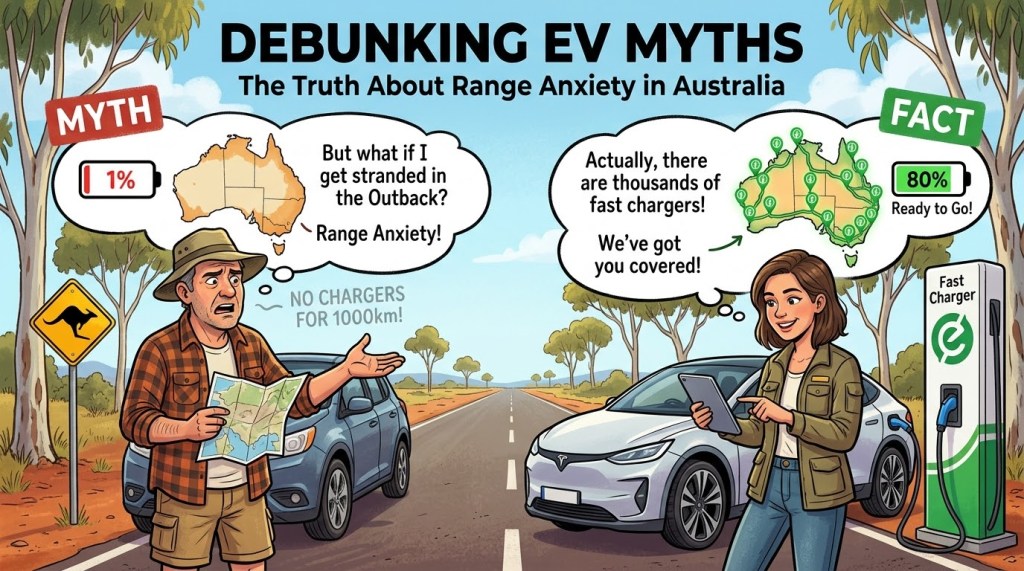
For years, the loudest objection was range anxiety: What happens when you want to tow the caravan to the Outback or drive the Hume Highway in 40°C heat?
In 2026, that talking point is losing its bite. With mainstream models regularly offering usable real-world ranges between 450 km and 600 km, the typical Melbourne-to-Sydney or Brisbane-to-Sydney run has transformed from an endurance rally into an ordinary drive. Drivers are discovering what early adopters tried to explain for years: on a 900 km trip, human bladders and coffee cravings give out well before modern batteries do. The fear of running dry on a major regional artery has largely been dispelled by ongoing DC fast-charger build-outs along national highway corridors.
Range anxiety hasn’t vanished entirely, but for the 90% of driving Australians do—commuting, errands, and regional weekend escapes—it is no longer the existential dread it once was.
Myth 2: “They’re Only Toys for Wealthy Inner-City Tech Bros”
The “luxury status symbol” tag hung over EVs for nearly a decade, largely courtesy of early six-figure imports. That narrative has effectively broken down in 2026. The influx of competitive models from manufacturers like BYD, MG, GWM, and Geely, paired with price repositioning from legacy brands, has triggered aggressive competition.
With sub-$35,000 drive-away electric runabouts now dotting suburban driveways and the federal fringe benefits tax (FBT) exemption remaining a powerhouse for novated leasing, EVs have shifted from leafy eastern-suburb status symbols to sensible outer-suburban commuter picks. For a household clocking 60–80 km a day across western Sydney or outer Melbourne, the fuel and servicing savings are simply basic arithmetic.
Myth 3: “Charging Is Impossible Unless You Own a Free-Standing House”
While overnight charging in a private garage remains the gold standard, the myth that EV ownership is impossible without a private driveway has taken a hit. Local councils and charging operators have made concerted pushes into destination and kerbside charging. Shopping centers, gym car parks, and train stations now routinely integrate Level 2 and DC fast charging into daily routines. Rather than treating an EV like a petrol car, driving until empty then queuing to fill up, Australian city dwellers are increasingly treating EV charging like a smartphone: top it up wherever you happen to be parked.
Where the Real Friction Lies in 2026
Busting outdated myths doesn’t mean the road ahead is entirely smooth. As emotional anxieties subside, they are being replaced by sharper, practical questions:
- Regional and Towing Demands: While highway corridors are better equipped, venturing deep into regional Australia or towing heavy loads still requires rigorous planning. Dual-cab diesel utes remain firmly entrenched on job sites and bush tracks for good reason.
- Charger Reliability vs. Quantity: The frustration in 2026 is less about whether a charger exists, and more about whether all four bays are operational when you arrive during peak school holiday periods.
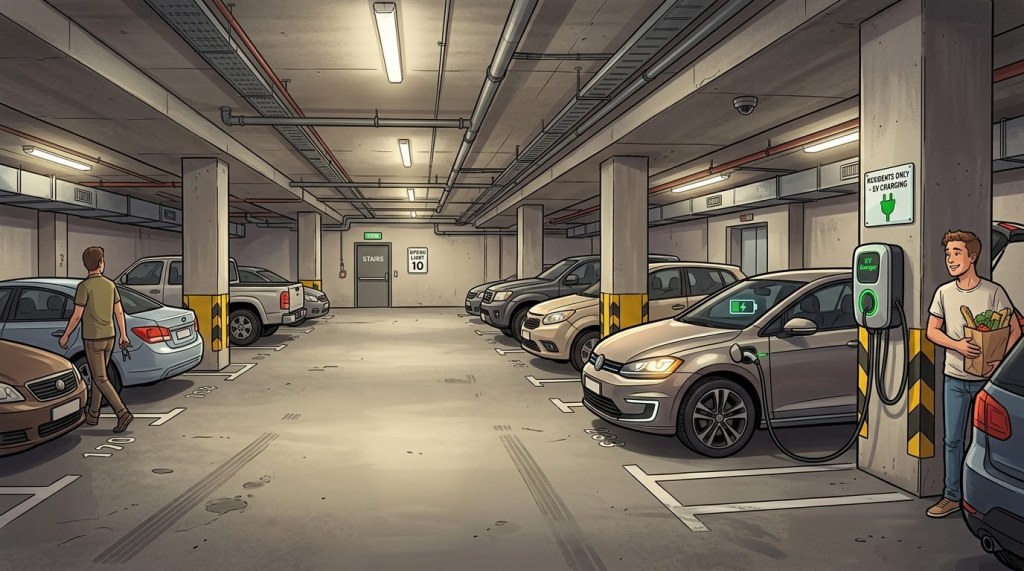
- Strata and Apartment Living: While retrofitting multi-dwelling buildings is gaining traction, navigating body corporates and shared power infrastructure remains a hurdle for high-density renters.
- Charger Vandalisation: Tied to range anxiety is increased levels of charger vandalisation with public charging infrastructure targeted by the criminal element for its copper. Tesla was recently victim to this at Ballarat, Victoria where 28 supercharger cables where cut.
The Verdict
In 2026, the Australian EV debate has finally shed its caricature. EVs are no longer viewed as mythical green saviours that will save the planet overnight, nor are they demonised as delicate golf carts that will ruin camping trips.
Instead, they are being judged where it matters most: on utility, total cost of ownership, and everyday convenience. And for an increasing share of Australian drivers, that verdict is quietly tipping in electric’s favour.


Leave a Reply