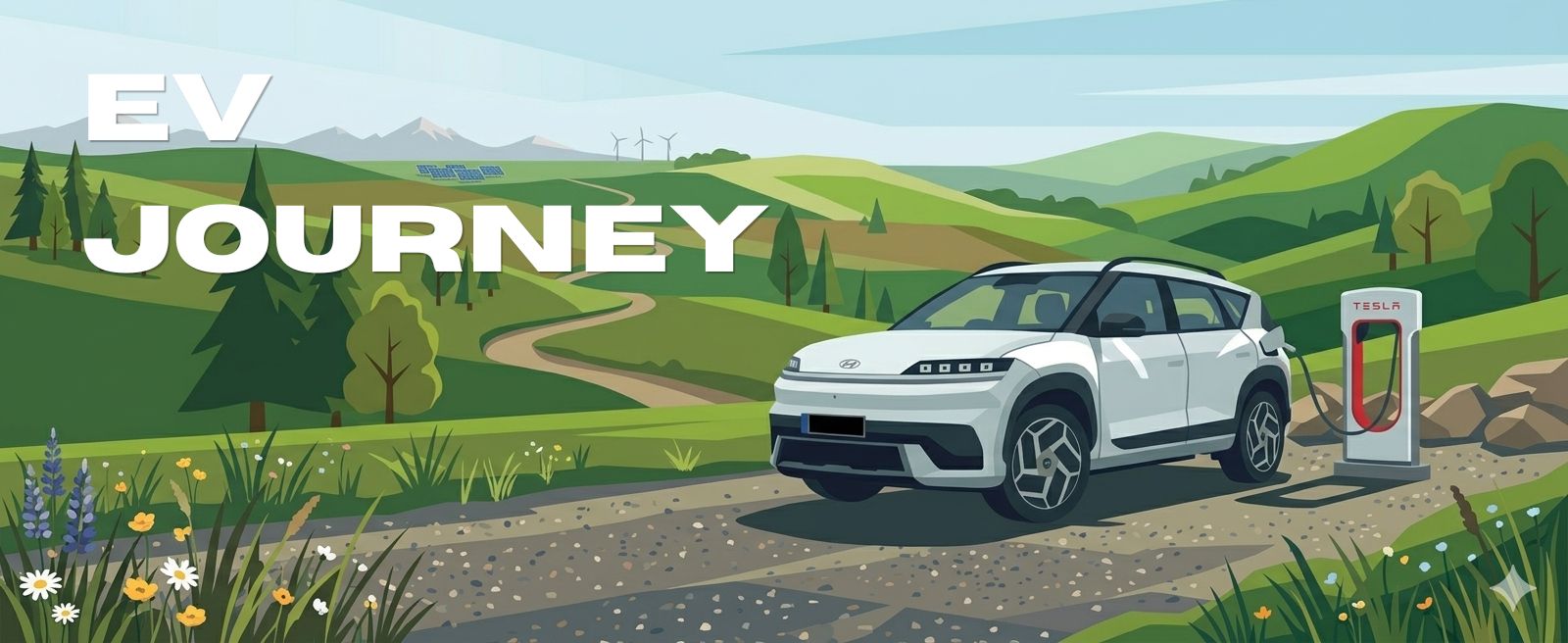
Hitting the open road in your electric vehicle is a fundamental shift from the old days. When planning my drive from Perth to Wagga Wagga in February 2025, a trip of over 3,500 kilometres, the only concerns I had at the time revolved around the age of my tires, having a decent pump, and having food and water for my multi-day journey; oh, and booking somewhere to stay of course. What used to be a mindless point-and-shoot drive suddenly requires a bit of strategy when you make the switch to an EV.
For newer owners in Australia, that first long-distance run can feel daunting given the vast distances between our regional centres. But the truth is, once you understand how to plan and which digital tools to rely on, road-tripping an EV is actually far more relaxing. Given most of my journeys have been more localised with my Elexio, I wanted to investigate planning a road journey and the tools on offer.
Here is how to seamlessly plan your longer journeys across the country, from the couch to the highway, using the highest-rated tools for the Australian market.
Phase 1: Planning on Your Trip
The secret to a successful EV road trip happens before you even unplug from your charging. Because Australian charging networks aren’t all connected through one platform yet, newer owners should rely on a few heavy-hitting mobile apps to map out the journey.
- PlugShare: This is the undisputed TripAdvisor of EV charging and a must-have for Aussie drivers. With over 65,000 five-star reviews globally, it lists the most chargers because it maps every network. It relies on crowdsourced check-ins, photos, and reviews to tell you if a charger is currently operational or blocked by a petrol car.
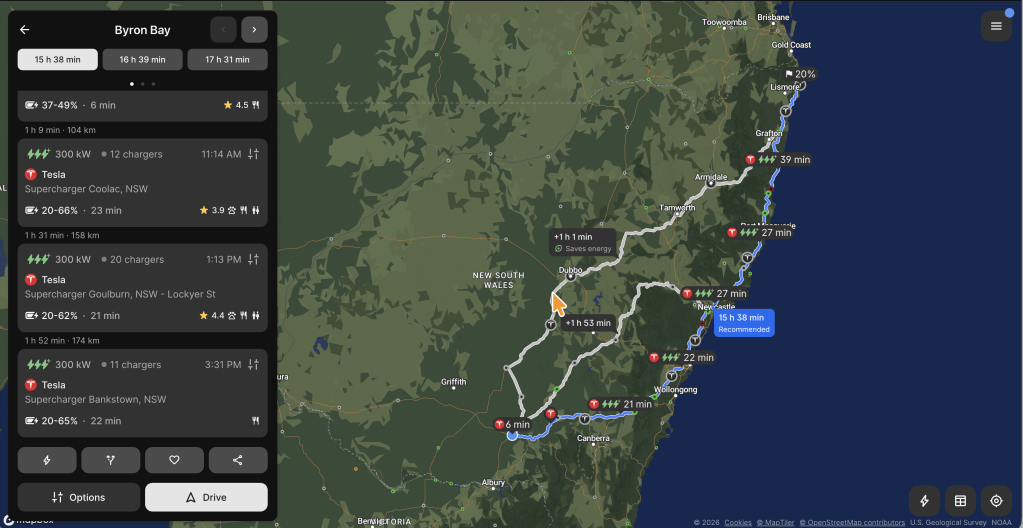
- A Better Routeplanner (ABRP): For serious long-distance trips, ABRP is the specialist. You simply enter your car model, your starting battery percentage, and your destination. It calculates exactly where to stop and how long to charge, factoring in your car’s real consumption, speed, weather, and elevation. ABRP can connect with each Apple CarPlay and Android Auto (for paid plans) for greater integration. As I discovered when logging in to day, ABRP didn’t have the Hyundai Elexio within its database of cars, but it does allow you to custom-add cars to its database whereby you plug-in a range of details about your EV that it can then use to calculate battery usage details.
- Plugroo: Built specifically for the Australian market, Plugroo acts as an aggregator. Instead of just throwing a map of pins at you, it helps you decide where to charge by filtering across all the major networks, meaning you only need to open a specific network app when it’s time to actually pay.
Phase 2: On the Road – In-Car Nav vs. Apple CarPlay
Once you are behind the wheel, discovering charging options shifts from planning to execution. You generally have two choices: your car’s built-in system or your phone projection (like CarPlay).
The Built-In Navigation Advantage
Your EV’s native navigation system usually has one massive advantage over your phone: it talks directly to the car’s battery management system. If you select a DC fast charger as your destination in the native nav, many cars will automatically “precondition” (warm up or cool down) the battery as you approach. This helps ensure that when you plug in, the battery is at the optimal temperature to accept a fast charge rate.
The Apple CarPlay / Phone App Advantage
While native systems are great for battery prep, apps like Waze and Google Maps via Apple CarPlay are incredibly agile for finding chargers on the fly. Waze, for example, allows you to input your specific plug type (like CCS2), and it will display compatible chargers along your existing route. This is incredibly handy if you need to make an unplanned detour in a regional town.
Phase 3: Activating the Chargers (The Top Aussie Networks)
You’ve planned the route and navigated to the station. Now you need to plug in and pay. Having the right Australian network apps installed and your credit card linked before you leave home is vital.
- Chargefox: As Australia’s largest charging network platform with roughly 1,800 roaming sites, a single Chargefox account lets you access and pay for chargers across multiple different business and government networks. It is highly rated for reliability and is backed by state motoring clubs like the NRMA, RACV, RACQ, and RAC.
- Evie Networks: Founded in 2017 and backed by ARENA grants, Evie focuses heavily on high-quality, ultra-rapid DC sites at shopping centres and highway roadhouses. They operate 300-plus fast sites across the country that are separate from the Chargefox roaming network.
- Tesla App: The Supercharger network offers highly reliable high-speed DC charging in the country. A growing share of Australian sites (about 110 locations) are now open to non-Tesla EVs with a CCS2 port. If you want peace of mind on the highway, set up the “Charge Your Non-Tesla” feature. Membership at $9.99 per month gets you the same cheaper rate as Tesla owners, beneficial if you will charge multiple times per month.
- JOLT (For City Stops): If your road trip includes a few days in an Australian capital city, JOLT is highly rated for offering 7 kWh of free charging per day at its kerbside chargers (though a $1.99 session fee applies).
- BP: BP offers its own charging network, however, rates can vary depending on locations and times, but are typically high speed.
3 Golden Rules for Newer Owners
- The 80% Rule: DC fast chargers pump energy in rapidly up to about 80%, but then the charging curve typically drops off a cliff to protect the battery. Unless you absolutely need that top 20% to reach the next regional town, unplug at 80% and keep driving. It is usually faster to make two short stops than one long one to 100%.
- Always Have a Plan B: Never roll into a regional charging station with 2% battery. Aim to arrive with at least 15% to 20%. If the charger is broken, occupied, or suffering a power outage, you need enough range to limp to a backup 50kW site or a caravan park.
- Bring Your Own Cable: While DC fast chargers always have heavy tethered cables attached, slower AC destination chargers (like those at motels, wineries, or regional shopping centres) often require you to bring your own Type 2 cable. Keep one in the frunk just in case.


Leave a Reply